
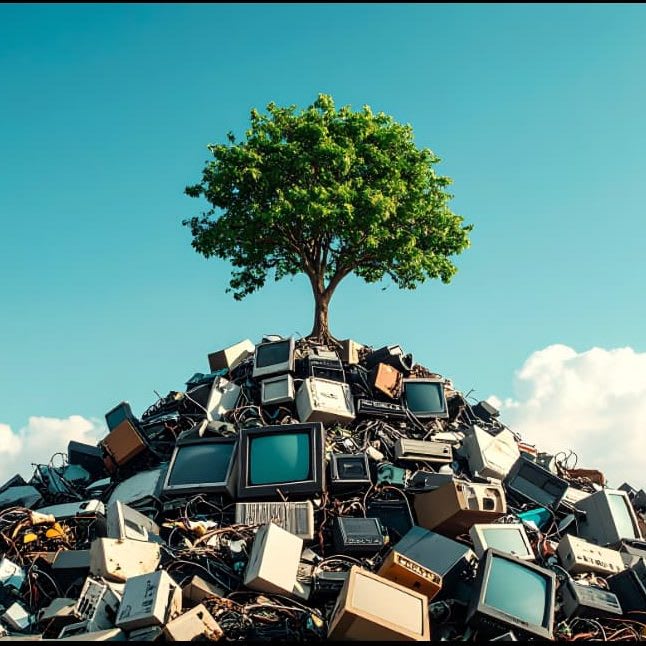
The Growing Volume of Electronic Waste
Electronic waste is the fastest-growing waste stream in the world, and the reasons are structural rather than accidental: shorter product lifecycles, cheaper replacement than repair, and devices increasingly built so that repair is impractical.
A phone replaced every two years is a design outcome, not a consumer whim.
Hazardous Materials Found in E-Waste
The hazard is concentrated in a handful of materials, each with a known route into the environment and a known effect on health.
- Lead — CRT glass and solder. Damages the nervous system; particularly harmful to children
- Mercury — screen backlights, fluorescent lamps, some switches. Affects brain and kidneys
- Cadmium — rechargeable batteries and circuit boards. Accumulates in bone and kidney tissue
- Brominated flame retardants — plastic casings. Persistent, and release dioxins when burned
- Beryllium — connectors and motherboards. Causes lung disease on inhalation
- Lithium — modern battery cells. Ignites when punctured or crushed
Environmental Impact of Improper Disposal
Landfilling is the slow route. Rain moves through buried electronics, leaching lead and cadmium into groundwater over years. Once those metals are in an aquifer they do not degrade — they persist and accumulate in whatever draws from it.
Open burning is the fast route, and the more damaging one. Burning casings to recover metal releases dioxins and furans directly into air. Acid baths used to strip gold from boards discharge heavily contaminated liquid straight into drains and soil.
Both are standard practice in informal recycling.
Health Risks Associated with E-Waste Exposure
The exposure is not evenly distributed. It falls overwhelmingly on informal recycling workers and the communities around informal yards, who handle these materials without protective equipment, ventilation or containment — often including children.
Documented effects include neurological damage from lead, respiratory disease from inhaled particulates and beryllium, kidney damage from cadmium, and reproductive harm from flame retardant exposure.
None of these are speculative and none require unusual concentrations.
Strategies for Reducing Environmental Risk
The single most effective action available to an individual or an organisation is choosing where material goes. Our Chennai recycling service is that licensed route.
A licensed facility dismantles mechanically, contains dust, separates hazardous fractions, and routes each stream to controlled processing. An informal yard does none of that. The device is identical; the outcome is not.
Beyond that: extend the life of what you own, repair before replacing, and buy from producers running genuine take-back schemes. Hazardous items such as battery scrap need a licensed route in every case.
For organisations, a scheduled disposal programme prevents the quiet accumulation of retired equipment that eventually gets cleared in a hurry by whoever is cheapest.
The Risk Is Specific, and So Is the Fix
The hazard in e-waste comes down to a short list: lead, mercury, cadmium, flame retardants, beryllium and lithium. Each has a known route out and a known effect.
Landfilling leaches those metals into groundwater slowly. Open burning releases dioxins immediately. Informal recycling does both.
The exposure falls hardest on the people doing that work, often without protection and sometimes including children.
None of it is inevitable. The same device dismantled inside a licensed facility produces none of these outcomes — the difference is entirely where it goes.