
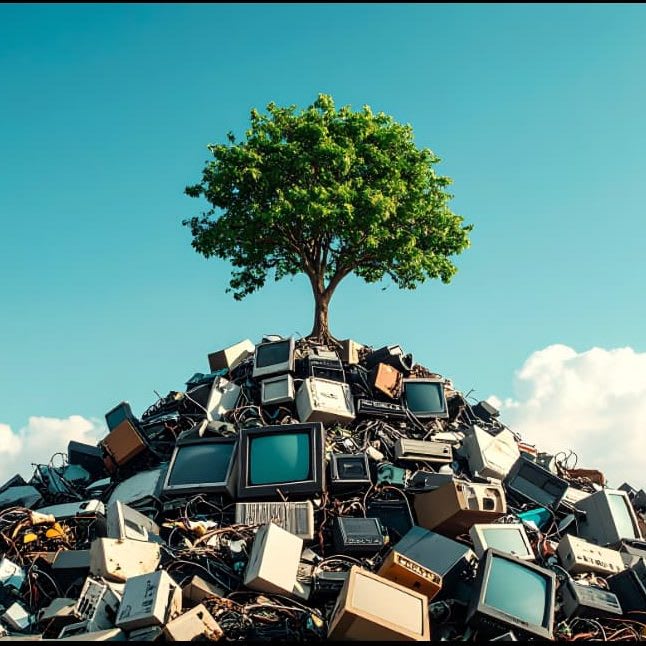
Understanding the Scope of Industrial E-Waste
Effective industrial e-waste management begins with recognizing its vast scope. It extends far beyond typical office electronics like computers and printers.
It encompasses specialized equipment embedded within the entire production lifecycle. This includes machinery from assembly lines, control systems, and R&D laboratories.
Consider items like programmable logic controllers (PLCs), robotic arms, automated test equipment, and industrial sensors. Even defunct HVAC control units qualify.
The global scale of this challenge is immense. In 2022, the world generated 62 million tonnes of e-waste, as per the Global E-waste Monitor 2024 (UNITAR/ITU).
This averages 7.8 kg per person globally. More concerning is that only 22.3% of this total was documented as formally collected and recycled, leaving a massive gap.
This trend is worsening. E-waste generation is on track to reach 82 million tonnes by 2030, while the documented recycling rate is projected to fall to just 20%.
Since 2010, the rate of e-waste generation has outpaced the growth of formal recycling by a factor of almost five. This creates escalating environmental and health risks.
In India, the scale is also substantial. The CPCB reported 13.97 lakh metric tonnes of e-waste generated in FY2024-25, with 11.59 lakh MT being recycled.
- Programmable Logic Controllers (PLCs) and Human-Machine Interfaces (HMIs) from automated machinery are common forms of industrial e-waste.
- Automated test equipment, oscilloscopes, and specialized laboratory power supplies require certified disposal.
- Retired industrial servers, data centre hardware, and enterprise-grade networking equipment contain both valuable materials and sensitive data.
- Decommissioned robotic arms, CNC machine control panels, and automated system components are part of this waste stream.
- Specialized equipment from medical diagnostics or scientific research labs also falls under e-waste regulations.
Regulatory Obligations for Indian Manufacturers
In India, the E-Waste (Management) Rules, 2022, provide the legal framework. These rules, in force since 1 April 2023, are comprehensive and strict.
They cover 106 categories of electrical and electronic equipment (EEE), encompassing nearly every device with a plug or battery used in an industrial setting.
A central pillar of the rules is Extended Producer Responsibility (EPR). This obligates producers, importers, and brand owners to manage their products at end-of-life.
As a manufacturer, you are often also classified as a 'bulk consumer'. This designation applies to entities that generate large quantities of e-waste from their operations.
This dual status means you must not only comply with EPR for products you sell but also manage the e-waste you generate as a user, like old factory equipment.
Bulk consumers have a clear duty: ensure e-waste is given only to authorized recyclers or refurbishers. You must maintain a verifiable chain of custody.
Data from the CPCB illustrates the national effort. In FY2023-24, 7.78 lakh MT were recycled out of 12.54 lakh MT generated.
Provisional data for FY2025-26, reported in March 2026, showed 14,14,645 tonnes generated and 9,79,080 tonnes recycled, with figures still accumulating.
- Manufacturers, as bulk consumers, must maintain detailed records of all e-waste generated and the manner of its disposal.
- It is illegal to dispose of any e-waste, from a small sensor to a large machine, in mixed municipal solid waste bins.
- The rules strictly mandate that e-waste be handed over only to organisations holding valid authorization from the CPCB.
- Compliance hinges on obtaining and retaining proper documentation, such as recycling certificates, from your chosen recycling partner.
- Producers face specific, government-mandated collection targets that must be met annually through their EPR programmes.
The Hidden Costs of Improper E-Waste Handling
The most direct cost of improper handling is regulatory non-compliance. State Pollution Control Boards can impose heavy fines and initiate legal proceedings.
Data security represents a massive financial and reputational exposure. Industrial equipment is not just hardware; it is a container for valuable information.
Retired servers, drives, and PLCs often hold intellectual property, production formulas, client lists, or financial data. Simply deleting files is not secure.
Without professional data destruction services, this information can be easily recovered, leading to corporate espionage or data breaches.
Environmental contamination is another major risk. E-waste contains hazardous substances like lead, mercury, cadmium, and brominated flame retardants.
When dumped in landfills, these toxins leach into soil and groundwater, posing severe health risks to communities and creating long-term cleanup liabilities.
There are also operational costs to keeping old equipment. Ageing servers consume excessive power and cooling, occupying valuable rack space without modern efficiency.
Their firmware often goes unpatched, creating a significant cybersecurity vulnerability that can be exploited to gain access to your network.
- The financial liability from regulatory penalties and mandated environmental cleanup costs can be substantial.
- A data breach caused by an improperly disposed hard drive can lead to the permanent loss of sensitive corporate data and intellectual property.
- Environmental damage can result in community backlash, negative press, and legal challenges from environmental groups and regulators.
- A company's brand image and corporate social responsibility credentials can be severely damaged by evidence of irresponsible disposal.
- Exposure to toxic materials from dismantled e-waste poses direct health risks to workers and nearby communities, including neurological and organ damage.
Developing an Internal E-Waste Management Programme
A formal programme creates a structured, defensible approach to e-waste. It should begin with a written policy approved by senior management.
This policy must define the scope, set objectives, and outline procedures for handling all electronic waste streams within the organisation.
Appoint a specific individual or team, such as an EHS officer or facility manager, with clear responsibility for the programme's implementation and oversight.
This appointed lead will be the single point of contact for employees, management, and recycling vendors, ensuring clear communication and accountability.
The programme must include regular, role-specific training. All employees should know how to identify e-waste, while technical staff need decommissioning training.
Establish a robust process for retiring assets. This involves inventory management, data sanitization protocols, and a formal request-and-approval workflow.
Each asset should be tracked from procurement to disposal, with its status updated in a central inventory system.
Your policy should explicitly state that e-waste must only be handled by government-authorized recyclers, reinforcing compliance for all corporate departments.
- Draft a formal, board-approved e-waste management policy that assigns clear roles and responsibilities.
- Designate a trained individual or committee to oversee all e-waste related activities, from collection to documentation.
- Implement an asset inventory system to track all electronic equipment through its entire lifecycle.
- Develop and communicate a clear schedule for regular e-waste collection from all factory floors, labs, and offices.
- Incorporate the e-waste policy and procedures into new employee onboarding and annual refresher training for all staff.
On-Site Segregation and Safe Storage
Effective segregation at the source is the cornerstone of efficient recycling. It prevents cross-contamination and maximizes material recovery value.
Establish dedicated, clearly labelled collection points. Use distinct bins for general e-waste, batteries, tube lights, and data-bearing devices.
Segregation helps your recycling partner. Pre-sorted materials require less manual labour at the facility, which can reduce your overall disposal costs.
Batteries, especially lithium-ion types, demand separate handling. Damaged batteries are a serious fire risk and should be stored in fire-retardant containers.
For specialized battery types, engaging dedicated battery scrap buyers who understand the specific chemistry and handling requirements is advisable.
Store all collected e-waste in a secure, dry, covered area. It must be protected from rain and direct sunlight to prevent hazardous materials from leaching.
The storage area should have an impermeable floor and be located away from drains to prevent any accidental spills from entering the environment.
For large items like machinery or server racks, designate a specific holding bay that does not obstruct emergency exits or daily operational pathways.
- Use distinct, colour-coded, and clearly marked containers to prevent mixing of different e-waste types.
- Isolate batteries and fluorescent lamps from other e-waste due to their unique chemical hazards and fire risks.
- Ensure the designated storage area is covered, has controlled access, and is equipped with appropriate fire safety measures.
- Avoid stacking heavy or delicate equipment in a way that could cause physical damage, release hazardous substances, or create a safety hazard for staff.
- Conduct regular training and spot-checks to ensure staff adhere to segregation discipline and maintain a clean collection area.
Choosing an Authorized E-Waste Recycling Partner
Your choice of recycling partner is the most critical decision for ensuring compliance. The vendor must be authorized by the Central Pollution Control Board (CPCB).
Before engaging, always ask for a copy of their CPCB authorization certificate. Verify that it is current, and that their facility address matches the certificate.
Ask if they possess a valid Consent to Establish (CTE) and Consent to Operate (CTO) from the State Pollution Control Board where their facility is located.
Inquire about their specific capabilities. Can they process the unique types of industrial equipment you generate? Do they offer secure IT asset disposition?
A key question is about their downstream process. Ask where the separated materials (plastics, metals, circuit boards) are sent for final processing.
A transparent recycler will be able to name their downstream partners, who should also be certified. A refusal to share this is a red flag.
Discuss logistics thoroughly. Do they provide on-site pickup? What are their requirements for packaging, palletizing, and minimum collection weight?
A professional partner is a compliance guide, not just a hauler. To find one, you can search for authorized e-waste recyclers in Chennai on the CPCB portal.
- Confirm the recycler holds a valid, unexpired CPCB authorization specifically for processing e-waste.
- Request a tour of their processing facility; a refusal to allow a visit is a significant warning sign.
- Evaluate their documented procedures for data destruction, including the methods used and the certification they provide.
- Understand their collection logistics, including vehicle size, required manpower, and on-site safety protocols.
- Ask for sample copies of all compliance documents they provide, including collection manifests, data destruction certificates, and recycling certificates.
The Resource Recovery and Recycling Journey
Once at a certified facility, e-waste begins a systematic recycling journey. The first step is secure check-in and weighing to document receipt.
Manual dismantling is next. Trained technicians carefully deconstruct items to safely remove hazardous components like batteries, mercury lamps, and toner cartridges.
This segregation is vital. It isolates dangerous materials for specialized treatment and separates high-value components like circuit boards for targeted recovery.
After dismantling, materials are shredded and granulated. This liberates different materials and reduces volume for automated sorting machinery.
Advanced systems like magnetic separators pull out steel, while eddy current separators isolate non-ferrous metals like copper and aluminium.
The final pricing for your scrap is based on this recovery. The market value of the recovered commodities is weighed against the costs of logistics, labour, and processing.
High-value server scrap may earn a rebate, while low-value plastics may incur a fee. We are one of the few computer scrap buyers to offer this transparency.
Industrial plants often generate multiple waste streams.
A plant floor rarely produces one kind of waste. Alongside retired electronics there are metal offcuts, swarf and cut-away frames, and they go to a different buyer on a different schedule.
That stream is worth running as deliberately as this one. RG Tech Engineering Works sets out how engineering workshops dispose of metal waste.
The value of these efforts is immense. The Global E-waste Monitor 2024 estimated that US$62 billion in recoverable resources were lost in 2022 from improperly managed e-waste.
- The process begins with manual dismantling to safely remove and isolate hazardous components like batteries, toner, and mercury-containing lamps.
- Mechanical shredding and granulation are used to reduce the volume of material and prepare it for automated separation.
- A combination of magnetic, eddy current, and optical sorters is used to separate ferrous metals, non-ferrous metals, and different types of plastics.
- Plastics are sorted by polymer type and either sent for recycling into new products or used for energy recovery.
- Printed circuit boards are sent to specialized, high-tech smelters and refineries to extract precious and special metals like gold, silver, palladium, and copper.
Documentation: Closing the Compliance Loop
Documentation is the final and most crucial step in the compliance process. It serves as your legal proof of responsible e-waste management.
At the time of collection, your recycling partner must provide a transport manifest or transfer note. This document details the items collected, their types, and weights.
After the material has been processed, the recycler is legally obligated to issue a formal recycling certificate. This is your key compliance document.
This certificate should clearly state your company's name, the recycler's details, the quantities and types of waste processed, and a confirmation of compliant recycling.
For any data-bearing devices, you must also receive a separate data destruction certificate. This is non-negotiable for mitigating data risk.
The destruction certificate must list the serial numbers of the drives or devices, the exact method of sanitization used, the date of destruction, and a signature.
These certificates are your primary defense in an audit by the State Pollution Control Board. They formally transfer the liability for the waste to the recycler.
Maintain a secure, organized file of all these documents for a minimum of five years, as they are essential for demonstrating your due diligence and compliance over time.
- Always receive a detailed collection manifest or transfer note at the moment the e-waste leaves your facility.
- Insist on a legally binding recycling certificate from your authorized partner after the material has been fully processed.
- Secure a separate, detailed data destruction certificate that itemizes every sanitized hard drive and storage device by serial number.
- Organize and file all certificates systematically, ensuring they are readily accessible for internal reviews or external compliance audits.
- Use this complete documentation trail to fulfill your reporting obligations on the central CPCB portal, especially if you are also a producer under EPR.
A Strategic Approach to Industrial E-Waste
Industrial e-waste management is a strategic function, not just a disposal task. It intersects with compliance, data security, and corporate responsibility.
By implementing a structured internal programme, you can control risks and ensure consistency. This provides a defensible position during any regulatory scrutiny.
Partnering with a CPCB-authorized recycler and maintaining meticulous records are the keys to closing the compliance loop and transferring liability correctly.
This proactive stance not only shields your business from significant risk but also reinforces your commitment to a circular economy and responsible manufacturing.