
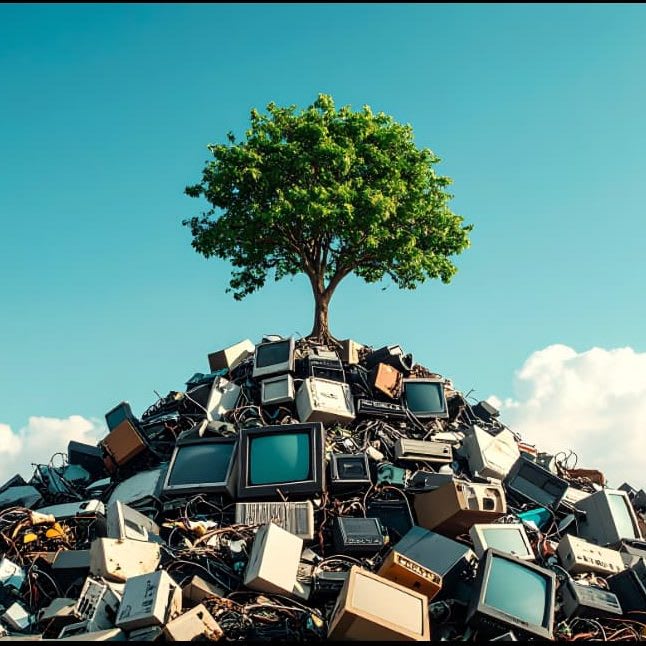
Understanding 'Donation' in the Context of E-Waste
The question of where to donate electronics is more complex than it appears. It spans data security, environmental responsibility, and regulatory compliance.
A 'donation' can mean two distinct things. The first is giving a working device for reuse. The second is consigning a device to a recycler for material recovery.
Understanding this distinction is the first step in responsible asset retirement. It determines the correct disposal pathway for each piece of equipment.
A functional laptop might be donated for reuse at a school, helping bridge the digital divide. A broken printer must be sent for recycling to recover its materials.
However, even donation for reuse is not always simple. The recipient must be able to use the device effectively without it becoming a technical or financial burden.
This guide clarifies these pathways for individuals and organisations in India. We focus on compliant and secure methods for managing unwanted electronics.
- Donation for reuse extends an asset's functional life, providing social or economic value to a new user.
- Recycling is a manufacturing process that recovers raw materials from non-functional or obsolete assets.
- Data security must be addressed before any device, whether for reuse or recycling, leaves your control.
- Using a government-authorized recycler ensures both environmental safety and legal compliance.
- A clear, documented policy for asset retirement is a feature of a well-run organisation.
The Global E-Waste Generation Problem
The volume of electronic waste is growing at an unsustainable rate. Globally, 62 million tonnes were generated in 2022, averaging 7.8 kg per person.
This figure is on track to reach 82 million tonnes by 2030, according to the Global E-waste Monitor 2024. This growth shows no signs of slowing.
Worryingly, the infrastructure for managing this waste is not keeping pace. Generation is outpacing formal recycling by a factor of almost five since 2010.
Only 22.3% of the e-waste generated in 2022 was documented as formally collected and recycled. The vast majority is unaccounted for, posing a severe risk.
This unaccounted-for waste often ends in landfills or is handled by an informal sector. This sector uses hazardous methods, releasing toxins into the environment.
The projected global recycling rate is set to fall to just 20% by 2030 if current trends continue, making the problem even worse as device complexity increases.
This also represents a significant economic loss. An estimated US$62 billion of recoverable materials like gold, copper, and aluminium went unrecovered in 2022.
- Global e-waste generation reached 62 million tonnes in 2022 and is projected to hit 82 million tonnes by 2030.
- The formal collection and recycling rate was a low 22.3% in 2022, with the rest being improperly managed.
- E-waste generation has grown nearly five times faster than documented recycling since 2010.
- US$62 billion in valuable, recoverable resources were lost from the circular economy in 2022 alone.
- The challenge requires a systemic shift towards formal, safe, and resource-efficient recycling programmes.
India's E-Waste Landscape and Regulations
India faces a similar challenge with its own rapidly growing volume of e-waste. The country has established a robust regulatory framework to manage this issue.
According to CPCB data given to the Lok Sabha, India generated 13.97 lakh metric tonnes of e-waste in FY2024-25, recycling 11.59 lakh MT.
For FY2025-26, generation was reported at 14,14,645 metric tonnes with 9,79,080 metric tonnes recycled. These figures were still accumulating when reported.
The E-Waste (Management) Rules, 2022, came into force on 1 April 2023. They are the cornerstone of e-waste legislation and apply to all stakeholders.
These rules are comprehensive, covering 106 categories of equipment and placing obligations on producers, recyclers, and consumers of electronic goods.
A key component is Extended Producer Responsibility (EPR). This places obligations on producers and brand owners to fund and manage end-of-life collection.
This EPR framework helps fund and structure the formal recycling industry, providing a compliant pathway for corporates and other consumers.
- India's E-Waste (Management) Rules, 2022, are the primary governing regulation for all stakeholders.
- The rules mandate Extended Producer Responsibility (EPR), holding producers accountable for their products' entire lifecycle.
- Bulk consumers of electronics have a legal responsibility to channel their waste only to authorized recyclers.
- Formal recycling volumes are tracked by the CPCB, showing a growing, regulated industry.
- Compliance with these rules is not optional; it is a legal requirement for all businesses in India.
Reuse vs. Recycling: A Critical Decision
The first decision for any unwanted device is whether it can be reused or must be recycled. This depends on its age, condition, and functionality.
Reuse is the preferable option from a resource-efficiency standpoint. It aligns with the top of the waste hierarchy, prioritizing use over material recovery.
It extends the device's useful life and can help bridge the digital divide if donated to schools, charities, or other non-profit organisations.
However, donating older equipment can sometimes be counterproductive. An old server, for example, may consume excessive power and lack security updates.
Such a device can become a liability for the recipient. It may cost more to operate and pose a security risk, making it unsuitable for donation.
Recycling is the correct path for devices that are broken, obsolete, or non-functional. It is also the path for items that pose a security or operational risk.
This process involves dismantling items to recover base materials. Partnering with authorized e-waste recyclers in Chennai ensures this is done safely.
- Choose reuse for functional, relatively modern devices with a clear second-life potential and no security liabilities.
- Choose recycling for broken, outdated, or insecure equipment that has reached its true end-of-life.
- Consider the total cost of ownership, including power and security, before donating older enterprise gear.
- Never dispose of electronics in general waste, as they contain hazardous materials like lead and mercury.
- Before donating, confirm with the organisation that the equipment meets their needs and technical capabilities.
Preparing Your Electronics for Handover
Proper preparation is vital before any device leaves your possession. This ensures data security and a smooth handover to a recycler or new user.
Start by backing up any personal or business data you wish to keep. Once a device is wiped or destroyed, this data is gone forever. Verify your backup is readable.
Next, remove all personal accessories and media. This includes SIM cards, memory cards, external cases, and any dongles you plan to keep.
Physically clean the device. A simple wipe-down removes dust and grime, making the unit easier and more hygienic to handle for the next person in the chain.
For businesses, inventory is critical. Create a list of all assets being disposed of, including asset tags, makes, models, and serial numbers. This is for your records.
This inventory list is essential for tracking and will be cross-referenced on the certificates you receive from the recycler, forming a key part of your compliance audit trail.
- Back up all necessary data from the device to a separate, secure location before proceeding.
- Remove all SIM cards, memory cards, and other removable media from the device.
- Do not attempt to remove internal components like batteries unless you are trained to do so safely.
- Create a detailed inventory sheet with serial numbers for every item being handed over for disposal.
- Securely log out of all connected accounts and services, such as iCloud, Google, or corporate accounts.
Data Security: The Primary Concern Before Donation
The single biggest risk in disposing of electronics is data exposure. Your responsibility for the data does not end when you dispose of the hardware.
A factory reset is not a secure method for erasing sensitive information. It often just removes pointers to the data, leaving the underlying files recoverable.
Data can be recovered from reset or formatted drives using simple software. This is a trivial task for a determined individual and a major corporate liability.
For corporate assets, professional data sanitization is mandatory. A professional data destruction service is essential for compliance and risk management.
This involves using software to overwrite the drive to international standards like NIST 800-88. This makes the original data practically impossible to recover.
For the highest security, physical destruction is the only guaranteed method. This involves degaussing (with powerful magnets) or shredding the media into tiny fragments.
Organisations must demand a data destruction certificate. This document is legal proof that data was handled and destroyed in a compliant manner.
This certificate should include the client's name, the recycler's details, the date, the destruction method, and a list of the serial numbers of all destroyed media.
- Always assume data is recoverable from a device until it is professionally sanitized or physically destroyed.
- A simple 'delete' or 'format' action does not permanently remove data from storage media.
- Software-based sanitization overwrites data to international standards like NIST 800-88.
- Physical destruction by shredding is the most secure method for end-of-life media and is often required for compliance.
- An auditable certificate of destruction, listing media serial numbers, is essential for corporate governance.
How to Find a Reputable Recycler or Donation Partner
Not all recycling operations are equal. The informal sector often uses hazardous methods that harm workers and pollute the environment with heavy metals and toxins.
These methods include open-acid leaching for precious metals and burning cables to recover copper, releasing toxic fumes and contaminating soil and water.
Always choose a government-authorized recycler. These facilities are audited by the CPCB and State Pollution Control Boards and are held to strict standards.
When vetting a partner, ask specific questions. Can they provide a copy of their CPCB authorization? What documentation do they provide for each batch of waste?
Ask about their downstream process. A credible partner will be transparent about where materials like batteries, plastics, and circuit boards are sent for final processing.
Also inquire about their security measures. This includes facility security to prevent theft and data security for assets awaiting processing.
This due diligence is a key part of modern IT asset disposition and protects your organisation from legal and reputational risk.
- Verify that the recycler is authorized by the CPCB or your State Pollution Control Board. Ask for their license number.
- Request sample documentation, including recycling and data destruction certificates, to review their process.
- Avoid informal collectors ('kabadiwalas') for e-waste, as they lack the equipment for safe processing.
- Ask about their downstream accountability and how they audit their own vendors.
- A reputable partner will welcome questions about their compliance and environmental practices.
The Economics of E-Waste: How Scrap Value is Determined
While some devices have resale value, the worth of true e-waste is based on the raw materials it contains. This is its scrap value.
This value is not arbitrary. It is directly tied to global commodity markets, such as the London Metal Exchange (LME) for base metals like copper and aluminium.
Precious metal prices, for gold, silver, and palladium found in circuit boards, are based on daily spot market rates. This means scrap value can fluctuate daily.
A recycler assesses a batch of e-waste and estimates the yield of each material. They then calculate a total value based on market prices.
From this total value, the recycler subtracts their processing costs. These include logistics, labour, energy, and the cost of safely disposing of hazardous materials.
The final offer to you is the net value. This is why sorted, high-grade material like telecom boards fetches a higher price than mixed, low-yield household electronics.
Some items, like old CRT monitors with leaded glass, may have a negative value. The cost to process them safely exceeds the value of materials recovered.
- Scrap value is based on the weight and type of recoverable commodities, not the device's original function.
- Prices are determined by commodity markets (e.g., LME) and fluctuate daily.
- The recycler's offer is the estimated material value minus their costs for processing and hazardous waste disposal.
- High-grade items like server motherboards and network switches have more value than low-grade items like printers.
- Items with high disposal costs, like CRT monitors, can have a net negative value, meaning a fee for recycling is required.
The Responsibilities of Bulk Consumers
The E-Waste (Management) Rules, 2022, place specific duties on 'bulk consumers.' This includes any organisation with large quantities of IT assets.
These organisations must maintain records of their e-waste generation. They must also ensure it is channelled exclusively to authorized recyclers.
This applies across sectors. Industries like banks and financial institutions must be especially careful due to data sensitivity.
Other sectors, such as telecom companies with network equipment and educational institutions, are also major bulk consumers.
Working with a certified recycler simplifies this. The recycler acts as a compliance partner, providing the paperwork to prove proper disposal during an audit.
Proper e-waste management is now a standard part of Environmental, Social, and Governance (ESG) reporting, reflecting a company's commitment to responsibility.
Maintaining an asset disposal register is crucial. It should log the asset ID, serial number, date of disposal, and the recycler's certificate number for each item.
- Bulk consumers are legally obligated by the 2022 Rules to use only authorized e-waste recyclers.
- Maintaining a detailed inventory of retired assets and their disposal path is crucial for audits.
- Compliance requires obtaining and archiving all necessary certificates from the recycler for each batch of waste.
- This process protects the organisation from legal penalties and demonstrates corporate responsibility.
- Integrating e-waste disposal into your asset management system streamlines compliance.
What Electronics Can Be Recycled?
The scope of e-waste is broader than most people realize. The 2022 Rules cover 106 categories of Electrical and Electronic Equipment (EEE).
This includes obvious IT items like laptops, desktops, monitors, printers, and phones. It also covers servers, networking equipment, and data centre hardware.
Consumer electronics like televisions, refrigerators, washing machines, and air conditioners are also e-waste at the end of their life.
Even non-functional equipment has value. Authorized recyclers are urban miners who act as computer scrap buyers, recovering valuable materials.
These materials include base metals like steel and aluminium, conductive metals like copper, and precious metals like gold and palladium from circuit boards.
Specialized components like batteries require careful handling. Professional battery scrap buyers ensure these are processed safely to prevent fires.
Any miscellaneous electronic scrap from manufacturing, repair, or assembly can be managed by professional e-waste scrap buyers.
- Virtually all items with a plug, battery, or circuit board are classified as e-waste when discarded.
- This includes IT equipment, consumer durables, medical devices, and telecommunication hardware.
- Broken and obsolete items are valuable sources of raw materials that can be fed back into the supply chain.
- Components like batteries, cables, and circuit boards contain both valuable and hazardous materials and must be recycled properly.
- A formal recycler can process a far wider range of materials than an informal collector.
A Structured Approach to Asset Retirement
Deciding where to donate electronics is a matter of structured, responsible planning. It is an integral part of the asset lifecycle, not an afterthought.
The correct path always begins with assessing an item's functionality and, most critically, securing its data. This protects your information and determines its potential.
For businesses, meticulous record-keeping is non-negotiable. An auditable trail of asset inventories and disposal certificates is essential for compliance.
The final step is choosing a government-authorized partner for either refurbishment or recycling. This crucial choice ensures compliance with Indian law and protects the environment.
By integrating these steps into your standard operating procedures, you can manage e-waste securely, compliantly, and sustainably.